Finding Plants for Native Restorations

While our company focuses mainly on residential design and installation, we do from time to time branch out on a commercial or specialty project. A recurring problem on one such restoration project, which occurs when working on native plant revegetation is finding the specified plantings. We have been working on an estimate for a landscape restoration of a creek channel in Marin. The plants specified for the revegetation of the creek banks are California natives, which are not grown in the mainstream nursery trade and only grown by native plant specialty nurseries. The problem that restorations provide are two fold- the plants themselves are not commonly grown and not widely available, and the numbers required to revegitate a restoration site (several hundred for a quarter acre of creek bank in this case) are typically not readily available.

An interesting example of this was a native grower who was contacted by a developer for a revegetation project. Frequently there will be a planning requirement that mandates revegetation with plants native to the site on large developments in California that displace existing vegetation. The builder contacted the grower with his list of several hundred native plants that were specifically endemic to the site, with a time table of 6 months for installation. The grower responded with frustration and amusement because none of the plants were available in the trade and had to be propagated and grown from seed or cutting. This process that can take several years depending on the size of plant required.
Soil Disposal Can Be Costly

There was an interesting piece in the San Francisco Chronicle about soil disposal in Atherton. The city council established a fee of $22 per cubic yard to dispose of soil to offset the cost of wear and tear on roads from large trucks hauling soil. After a voracious outcry from residents they removed the fee. For large basement projects the fees could add up to tens of thousands of dollars.

One would assume that this fee was on top of the cost imposed by the disposal service or dump. Here in Marin disposal fees can run $35-50 per yard for soil debris bins delivered to a project site. At the local dumps the fees are less, $15-30 per yard, assuming the material being disposed is clean fill soil. Using Marin’s prices as a guide, the Atherton fees would have amounted to a 50-100% additional cost. An average residential landscaping project can generate anywhere from 10-200 cubic yards of soil material if large retaining walls or terraces are involved that require extensive excavation.


Current Project- Novato

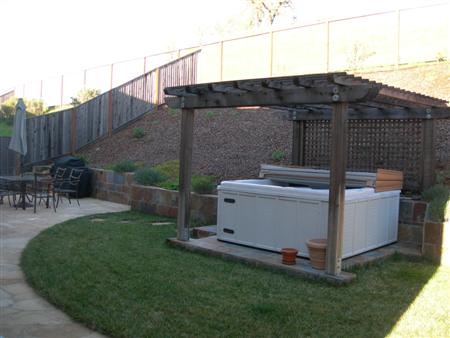
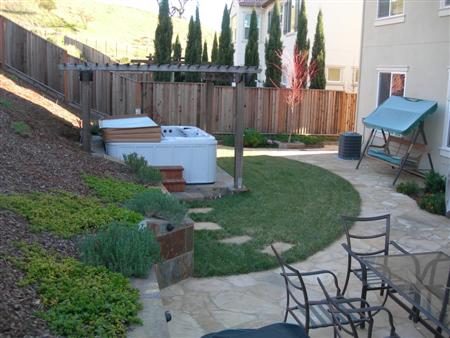
We are wrapping up this project in Novato, a renovation of an existing back
yard landscape to create more usable area and better transition spaces. We
pushed the spa and retaining wall back into the hillside to create more space,
planting the back hillside and expanded the lawn and flagstone walkways.

nb.jpg
Before- The previous spa configuration, while not
unattractive, created unusable lawn space and cramped the back yard

nb2.jpg
Before- The flagstone walkway that was existing was cramped by
the lawn and spa configuration

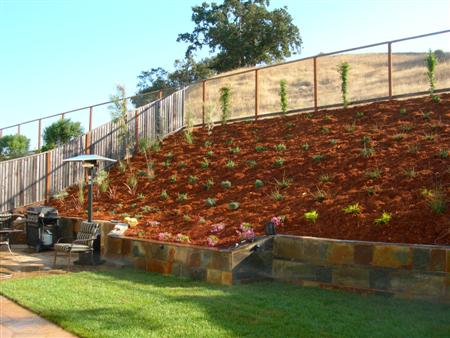
nf1.JPG
The
old spa pad was moved from the center of the yard to the edge of the yard,
creating more open usable space. The hillside was planted with groundcovers and
colorful perennials to open up views from the interior and improve on the bare
hillside.

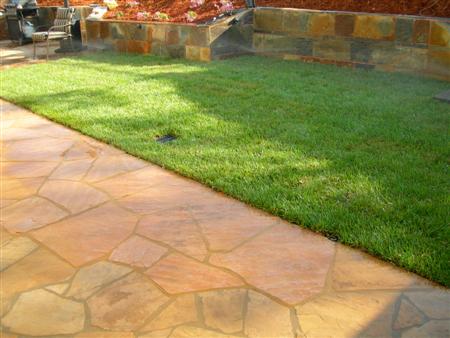
nf2.JPG
The
existing flagstone was matched to tie in a seamless appearance with the old
patio.

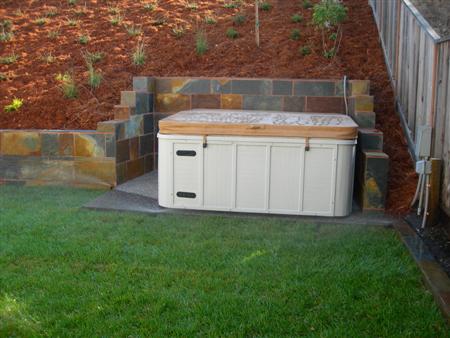
nf3.JPG
The
spa was pushed back into the hillside, creating more usable space within the
yard.