The Green Wall of Mongolia

There was a fascinating article in the Wall Street Journal (subscription required) today about efforts in Mongolia to fight sand storms in the Gobi Desert that are progressively becoming worse (expanding goat herds and global warming being two main culprits). The storms frequently blanket Beijing with sand and dust, with material and haze ending up as far afield as Utah.

The solution, a $150 million dollar project to plant Alders, Junipers and other hardy plants (temperatures range in the Gobi from -40 degrees F to 110) in a huge windbreak across the country to help control the storms and dust. Experts are skeptical whether the endeavor will be successful, but Mongolians are hopeful the vegetation project will make a difference in controlling the storms.

Like any vegetation project, the difficulty lies in getting the trees and shrubs to establish and be maintained over the long term. In a couple of decades we may be referring to a second Asian wonder, the “Green Wall of Mongolia.”
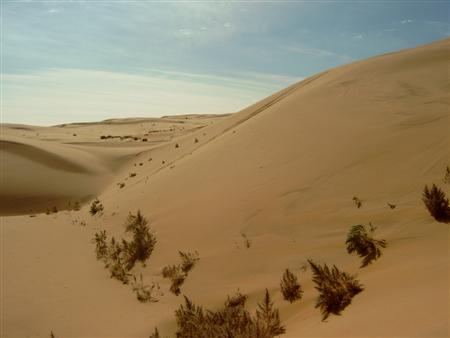
gd.jpg
Image from Wikipedia


Mailbag- Railroad vs. Landscape Ties

We received an email from Griffin, who writes with a question on the difference between railroad and landscape Ties:

In many projects it seems you use ‘landscape ties’. Are these the same as railroad ties or are they the pressure treated version of railroad ties? The reason I ask is that I don’t like the look or pressure treated wood but am concerned about leaking railroad ties.

A: Landscape ties are nothing more than pressure treated Douglas Fir, typically 6×8. There are a few of different methods for pressure treating- with either a greenish, reddish, or blackish tint (without getting into the different types of chemical treatments used- check with your local lumber yard for the type of pressure treatment that is best for a particular application). Railroad ties, strictly speaking are black in color and coated with Creosote and a number of other chemicals that you really wouldn’t want to use in a residential setting. I hope this explains the difference and our nomenclature.


Revisited Project- San Rafael

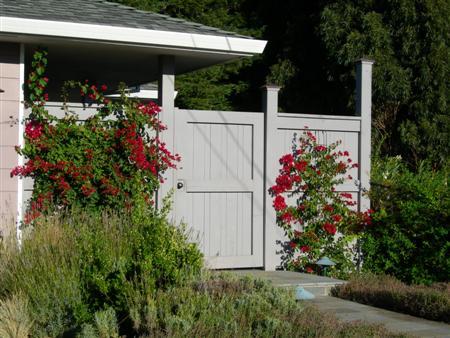
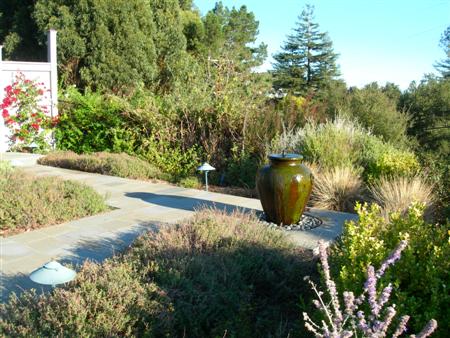
Here are a couple of photographs from a project in San Rafael that was
installed 4 years ago. The project included a front entrance bluestone walkway,
plantings, urn fountain and entrance gate in the front yard. The interior yard
featured a bluestone entryway, lawn, wood retaining wall and railing, and
plantings.

csr.JPG
Entrance Gate, planted with Bougainvillea

csr2.JPG
Entry Bluestone Walkway and Fountain


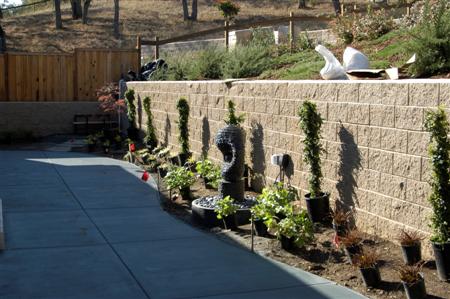
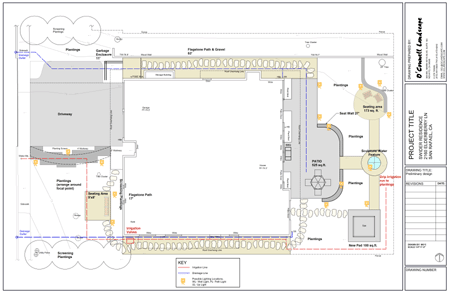
Current Project- Novato Intimate Garden

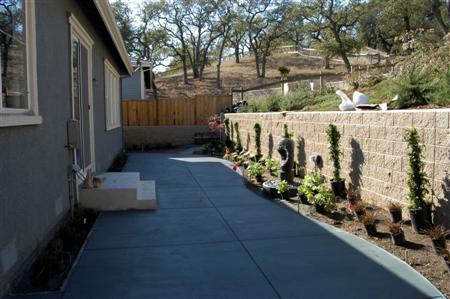
This is a project for a new home in Novato. As is frequently the case, the
residence is on a hillside and the space in the back yard is limited. The design
for this project sought to create a usable back patio space, leaving room for an
Asian themed border planting.

jn1.JPG
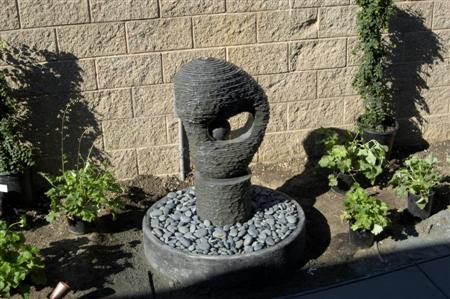
Custom Stone Fountain

jn2.JPG
Curvilinear colored concrete patio

jn3.JPG
Creeping Fig vines to help soften the existing retaining wall
and Asian themed plantings with Japanese Forest Grass, Japanese Maple, and
variegated Liriope as featured plantings


The Mundane Is Important

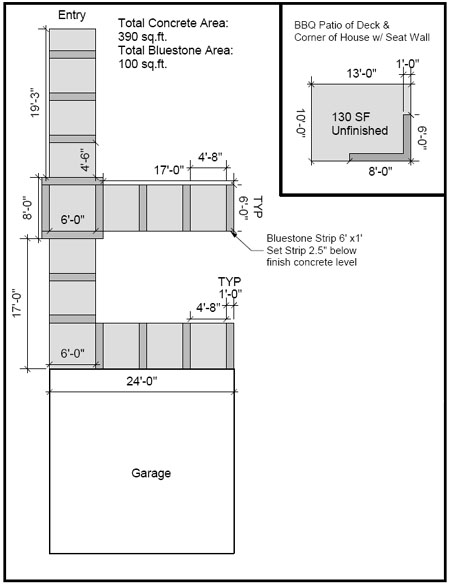
Working in conjunction with a general contractor on an aspect of a construction project produced the following revision to a concrete paving pattern. The revision was different than an earlier conceptual scheme for the walkway in some small alignment details. While the builder commented that the adjustments could be made in the field, my experience has always been that clarity and specificity on paper save headaches later on.

ccon.jpg

To quote the architect Le Corbusier- God is in the details.


Low Voltage Lighting Systems and Energy Requirements

The State of California put into effect new energy regulations, Title 24, that regulate energy usage of light fixtures installed in commercial and residential settings. One point of confusion is the application of the new law, which went into effect last October, on low voltage landscape lighting systems.

Exterior lights mounted on buildings have a variety of new restrictions regarding fixture energy efficiency, photocells, and motion detection equipment. Fortunately, these new restrictions don’t apply to landscape lighting systems. To quote the California Title 24 Residential Compliance Manual,

“Example 6-15
Question
My House has a row of small incandescent bollards along the walk way to the front door. Do these have to be high efficacy?

Answer
No. The high efficacy requirement only applies to lighting mounted to the building.

Example 6-16
Question
I would like to install low-voltage landscape lighting in my yard. Are these required to be on a motion sensor and photocontrol?

Answer
No. Even though low-voltage lighting does not qualify as high efficacy lighting, lighting not attached to a building, like landscape lighting, is exempt from this requirement.”

These exemptions make sense, because landscape lighting is in a completely different class of application and energy use than other residential and commercial lighting.

Posted by Michael O’Connell at 07:18 PM | Comments (0)

Fall Is In The Air

There definitely is a feeling of fall in the air here in Northern California. People often lament a lack of seasons here in California, but they are still here, if a bit more subtle. The days are growing shorter, our Indian summer October weather is here today, and of course the trees are turning. Striking specimens this time of year are Chinese Pistache and Liquid Ambar; two trees that dependably color this time of year.

It is always amusing when planting people’s yards how they are drawn to plants in season. In the fall people want to plant Crape Myrtles and Japanese Maples, in the spring its Flowering Cherry and other blooming fruit trees. Most trees that have this seasonal interest do go deciduous and drop their leaves- thus emerging or departing all the more spectacularly.


Remembering the Rain

With a feeling of fall in the air and showers descending on the North Bay this morning, we are jolted back to the reality of working in the rainy half of the year. All things considered, California’s Mediterranean climate affords an amazing opportunity to work year round. This is without threats of snow or freezing temperatures endured by most of the rest of the country. Still, working in the summer has the benefit of not staring at 10 day forecasts or satellite and doppler radar each morning.

Working in wet weather will typically slow the pace of landscape projects, but most items can be continued on in the rain; with notable exceptions being large excavation in heavy rain and finished concrete. The other benefit of the onset of fall is being able to start to turn down sprinkler systems from the summer watering schedule.

For More:
“Dealing with Rain in Landscape Projects”
Weather.com – 10 Day Forecast (San Rafael), Western Satellite/Doppler