October 2007 Archives
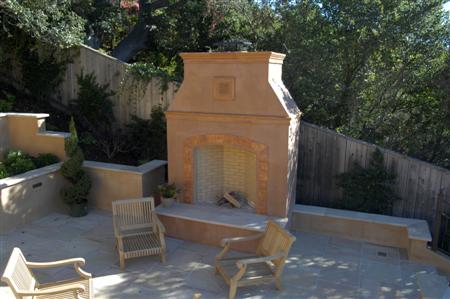
Here is a follow-up on a previous posting on an outdoor Rumford fireplace for a project in Tiburon. The final stucco and tile detailing has been completed and its ready for the marshmellos.
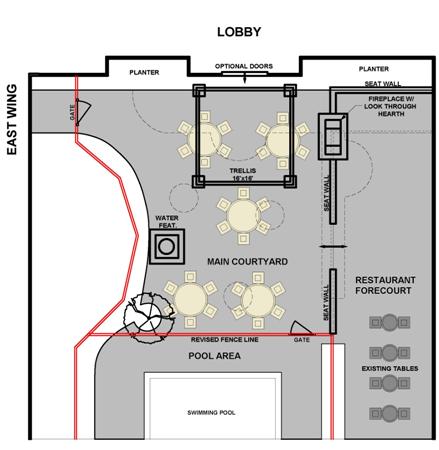
Here is a conceptual drawing for a pool courtyard project for a hotel/restaurant featuring a main trellis structure, outdoor fireplace and water feature.
The firestorms that are raging through Southern California provide a good reminder on why planning for fire in landscaping your home is an important consideration, especially in the arid west. In Marin County there are several densely wooded areas, in Fairfax and Mill Valley especially, that are very suceptible to fire. There are a few key considerations that can help reduce fire risk in the event of a major blaze. Having defensible space where vegetation is cleared around the home is a key consideration. Removing pyrophitic vegetation close to the home, such as Eucalyptus, Pines, and Junipers can also help. For example, the city of San Rafael recently passed an ordinance requiring the removal of all bamboo and junipers within 100' of structures by 2011.
Firesafe Marin has these important tips:
Planning
- Assess your fire risk. Is your home on a hill? Are you near highly flammable native vegetation or drought-damaged ornamental plants? If your answer is yes, your fire risk is greater than average.
- Contact your local fire department for fire hazard ratings in your neighborhood.
- Plan your landscape to reduce the amount of flammable vegetation nearest your home. Establish defensible space.
- Consider consulting your local nursery or a landscape contractor to help plan your landscape.
Spacing
- Eliminate the "fire ladder." Fire needs fuel to burn. You can sap its strength by robbing it of the continuous sequence of vegetation that can carry flames from your landscape to your house.
- Group plants of similar height and water requirements to create a "landscape mosaic" that can slow the spread of fire and use water most efficiently.
- Space trees at least 10 feet apart, and keep branches trimmed at least 10 feet from your roof. For trees taller than 18 feet, prune lower branches within six feet of the ground.
- Install fire resistant, drought-tolerant plants that have a high moisture content. Use plants that do not accumulate dead leaves or twigs.
- Use masonry or stone walls to separate plant groups and add variety to your landscape.
Watering- Choose the right irrigation system. While all plants will eventually burn, healthy plants burn less quickly. Your plant selection and water availability will determine the right system for you.
- Consider drip irrigation for watering most of your landscape. It's effective and conserves water because it targets where the water goes and how much gets there.
- Use sprinklers for lawns or turf landscaping. Drip irrigation does not work well on lawns. Sprinklers on timers ensure your lawn is getting the right amount of water to keep it healthy and fire resistant.
Maintenance
- Keep your landscape healthy and clean. On a regular basis, remove dead branches, leaves and pine needles from your yard. These can serve as added fuel to a fire.
- Prune and thin shrubs, trees and other plants to minimize the fuel load.
- Be diligent about cleaning up, especially during fire season. Remove dead leaves from under the plants as well.
- Involve your gardener. If a gardener cares for your property, ask him or her to include these regular maintenance steps as part of the routine service.
- Recycle/compost plant materials. Participate in your community's green waste recycling program. You can also compost plant litter and create a money-saving alternative to store-bought soil and mulch. Grass cycling is another time and money saving way to make your green waste work for you.
For More:
Lists from MMWD and Fire Safe Marin
New City of San Rafael Fire Ordinance

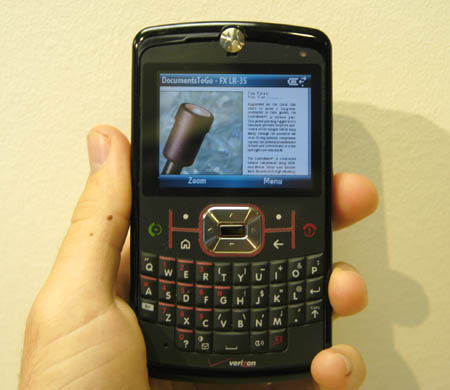
I just upgraded to a different Smartphone and have been working on ways to get it up and running (email, Outlook Contacts etc.). One of the most amazing services that I encountered is Orb, which is mainly designed to stream music and video to mobile devices. Orb essentially turns your main computer into a server that can be accessed via the web. The great aspect of Orb, besides it being free, is you can also share documents.
I can be out in the field, needing to check the contract for the Jones project, and log into my PC via the web and download the document to my phone (and listen to the Rolling Stones from PC while doing it). While there are sometimes bugs in transferring the information, this is a pretty amazing service.

Viewing a .pdf file of lighting specification sheet pulled from a desktop computer on a Smartphone
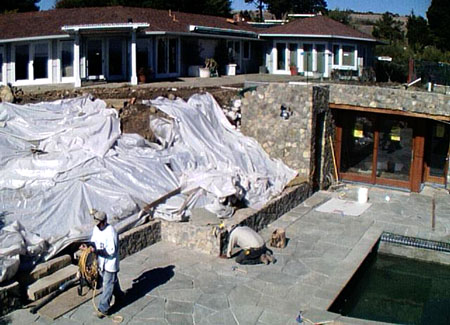
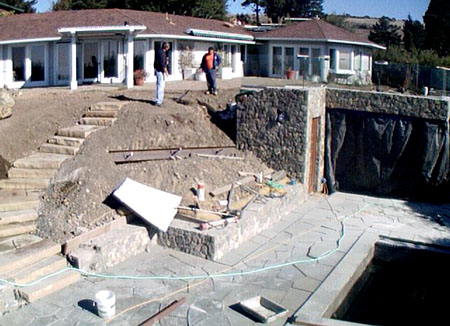
With October rains upon us, it is time to get out the plastic tarps, rain suits and boots to deal with the weather. We typically try to work even on rainy days; although if it is pouring there's not a lot we can do. We will frequently construct tent structures so we can continue work setting flagstone or building retaining walls.
Here is a construction progress photo for a bluestone patio on a current project in Tiburon. Bluestone is typically imported from
This patio is of Select Blue grade, which has only blue and gray tones with no browns. This irregular installation is much like a huge jigsaw puzzle. Pieces are cut and fit together to create a patio with nice consistent grout joints and an organic overall character.
Select Blue Irregular Bluestone Patio

We are currently working on a project where we are going to install a mechanical barrier (gopher wire and gopher baskets) for all lawn and planted areas. This is an expensive solution for large areas, and it isn't bulletproof, but it helps insure there aren't problems with gophers harming newly planted areas.
The University of California Integrated Pest Management Program, has a good general guide to dealing with gophers and the different treatment types available. An important highlight:
No repellents currently available will successfully protect gardens or other plantings from pocket gophers. Plants such as gopher purge (Euphorbia lathyrus), castor bean (Ricinus communis), and garlic have been suggested as repellents but these claims have not been substantiated by research. Although there are many frightening devices commercially available to use on pocket gophers (vibrating stakes, ultrasonic devices, wind-powered pinwheels, etc.), pocket gophers do not frighten easily, probably because of their repeated exposure to noise and vibrations from sprinklers, lawnmowers, vehicles, and people moving about. Consequently, frightening devices have not proven to be effective. Another ineffective control method is placing chewing gum or laxatives in burrows in hopes of killing gophers.
This leaves trapping, baiting, or barriers as the best ways to deal with gophers in the garden.
For More:
Information from Colorado State
Another Guide From Iowa State
Iowa State Information on Moles

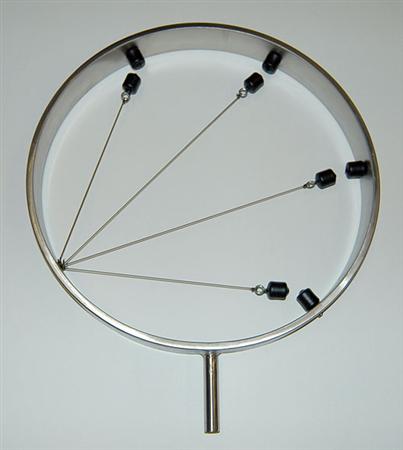
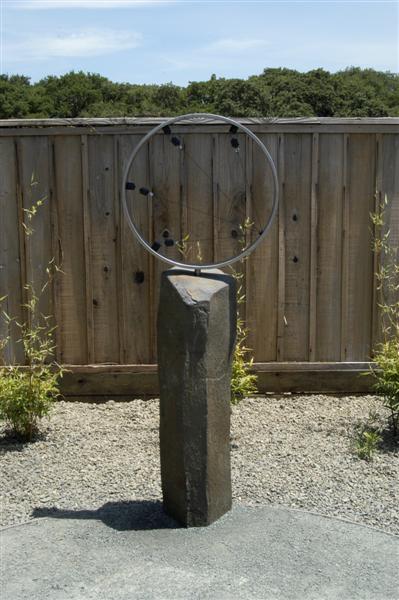
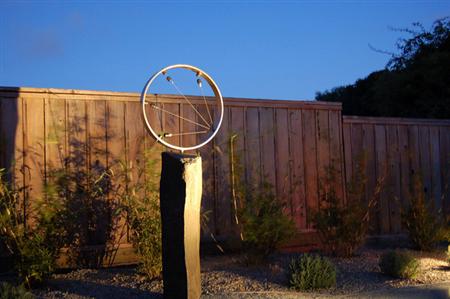
This is a stainless outdoor version of "Suspension." It is made all in stainless steel, and the magnets on the frame and cords are bolted through for permanent bonding. Those are high powered industrial rare earth neodymium iron boron magnets on the ends of the cords, and also on the frame of the circle, to hold the magnets in place by magnetic force alone. This version has a solid stainless rod on the bottom to be mounted into a chuck of basalt rock that has been acquired by the client. (24" x 24" x 3" plus 5" mounting rod)

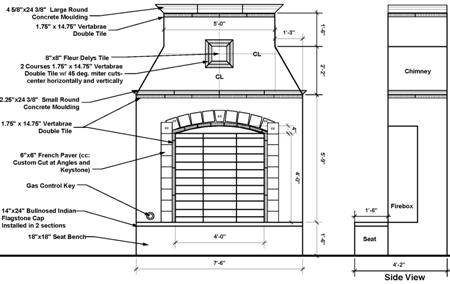
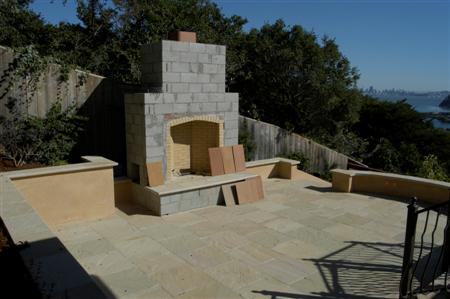
Here is a design detail and progress photo for an outdoor Rumford Fireplace we are working on finishing up in Tiburon. The shell of the fireplace has been constructed; now the finish tile borders around the hearth and tile cornice details are left to install, followed by a contrasing coat of stucco.
Rumford fireplaces are modular units that are designed to be easy to install, and to project more heat into the space, instead of escaping up the chimney. More information is available at the Rumford Website.