April 05, 2007
New Design Services Overview
We have posted a new Adobe Acrobat .pdf version of our design services overview that gives a good outline of our design process and areas of specialization- including our design/build approach to landscape projects.
Posted by Michael O'Connell at 09:56 AM | Comments (0)
March 15, 2007
Are Fancy Public Spaces Worth the Money?
Looking at some recent covers of Landscape Architecture magazine, it lead me to ponder an interesting series of questions regarding the cost of public projects-
Yes, these designs and public spaces are beautiful and interesting design-wise, but are they worth the money to construct? Is it worth the money at Union Square in San Francisco to use stone paving instead of concrete? Is it worth the money to incorporate custom designed elements into a park or public space that cost much more because of their unique or custom nature? Would the public be better served by spreading tax dollars or other park funding sources thinner over a wider area? Should there be better funding of future maintenance of parks, rather than spending all the money on a fancy new installation that weathers poorly? If the choice is to install ten nice small parks in a city, or one avant gard fancy park, which benefits the community more?
A lot of the answers to these questions are wrapped up in machinations of politics, the way public works projects (or semi- public projects) are funded, the type of projects designers want to design (award winning and new), and our general public curiosity with new and interesting designs. All this does not mean that it is the best use financially, that this money provides us the most benefit publicly for the money invested. Public projects might benefit if these questions were examined upon funding of new park or public works project. And yet, these questions are asked, and design projects are heavily value-engineered to strip out expensive elements and keep down costs. In the end, the goal should be, which park is going to be serve the public and benefit the community. A subjective and difficult question to answer- if this is the central question or focus, does a landmark the Golden Gate Bridge get built?

Are features, like this fountain in San Francisco's Yerba Buena Park, worth the high cost of installation and maintenance for the enhancements they provide to the park space?
Posted by Michael O'Connell at 12:46 PM | Comments (0)
February 07, 2007
America's Favorite Buildings
An interesting poll from the American Institute of Architects (AIA) and the Harris Poll found a number of buildings that are the public's favorites, contrary to the tastes of many architectural critics. The Empire State Building was the favorite building, San Francisco's Golden Gate Bridge was fifth, with many of Washington's national monuments rounding out the top 10. The public had a less critical eye than many architects that pick their favorites, rating the Las Vegas Bellagio hotel in the top 25.
For More:
Story from Rueters
Posted by Michael O'Connell at 09:39 AM | Comments (0)
December 11, 2006
From the Drawing Board: Water Feature
Here is a design detail for a water feature in an elevated walled bed. The water feature being used in this installation is a Mizubachi black granite piece from Stone Forest. The wall surrounding the stone will be faced with Sonoma Fieldstone Veneer and capped with a bluestone seating ledge.
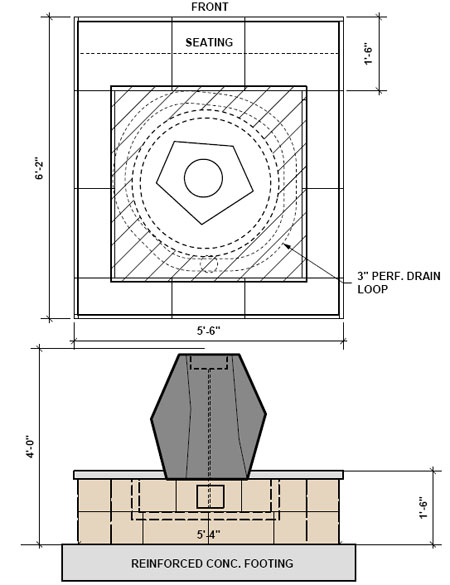
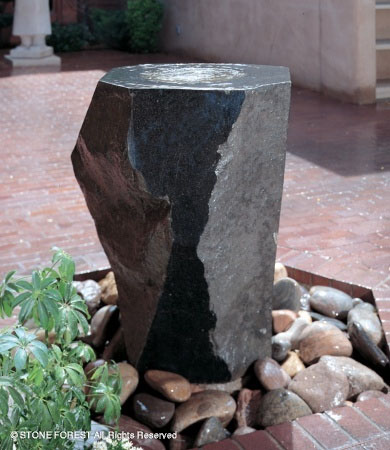
Photo from Stone Forest
Posted by Michael O'Connell at 05:34 PM | Comments (0)
October 06, 2006
From the Drawing Board- San Rafael Project
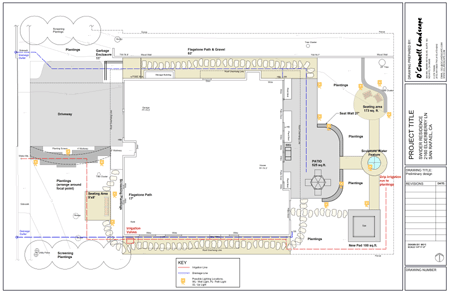
Here is a conceptual layout for a project in San Rafael. The Eichler home is being reworking in the front and rear yards to give an updated modern garden that functions as an extension of the residence.
Posted by Michael O'Connell at 02:46 PM | Comments (0)
August 09, 2006
From the Drawing Board- Access Stairs
Here is a basic design element, a detail for wood stairs with railings to provide access for an area above an existing retaining wall. The exposed area underneath the steps is screened in with lattice to provide a storage area.
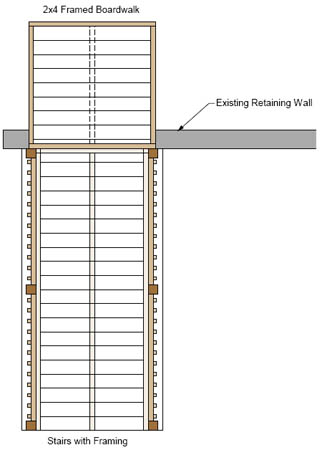
Plan View
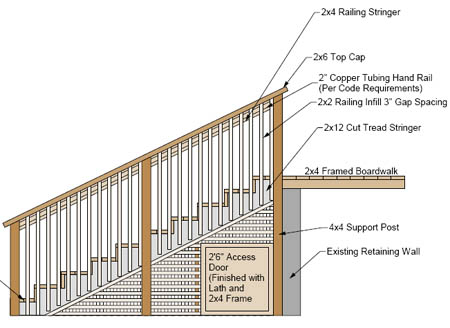
Elevation View
Posted by Michael O'Connell at 05:18 PM | Comments (0)
July 19, 2006
From the Drawing Board-Planting Concepts
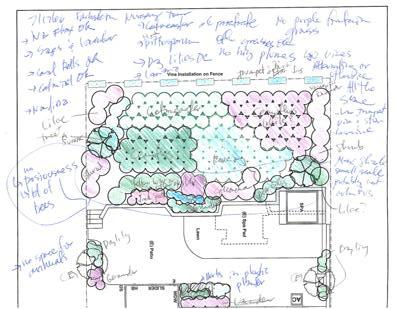
How do planting plans evolve from initial client preferences to final installation? Usually through a sequence of steps.
First, we talk with the client about the style of plantings they prefer and how this relates to the overall design style for the project. Next, we create a plant booklet that outlines recommendations (includes a photo and characteristics) based on our initial conversations and the realities of the site where the plants are to be installed. The booklet might contain anywhere from 25-100 different plant varieties. Clients may be more or less horticulturally inclined, but usually we ask them to select plants that they either love or hate, and then we work to fill out the rest of the palette.
After we have a general idea for plant selection and style we usually create a massing plan. This sets the relationships and geometries of the plantings (usually based on size, and the location of any specimen plants). We then assign plant varieties, moving, modifying, and tweaking things as we go. At this stage, we may lead the clients on a tour to the local nursery to view the plants 'in the round,' as this is usually much more informative than viewing pictures alone. For big trees, we may go to a tree nursery and select specimens with the client.
After we assign varieties, we usually present the plan to the client for final approval. Any final changes are made, and the plan is ready for construction. This usually is not the end of the process however. In the field we do a preliminary layout of the plants prior to installation, to make sure the client likes the overall layout and positioning of the plants. We have found this process to be very effective as it is much harder to move plants after they have been planted. Once the client has approved the field layout we start planting. Remember, green side up!
Posted by Michael O'Connell at 05:35 PM | Comments (0)
July 12, 2006
From the Drawing Board- Color Planting Plan
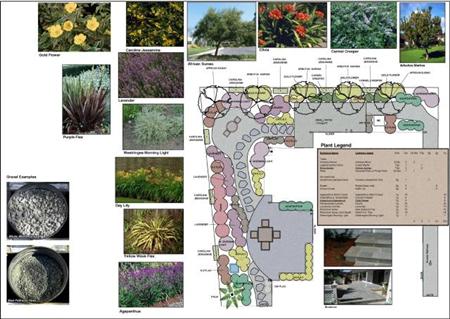
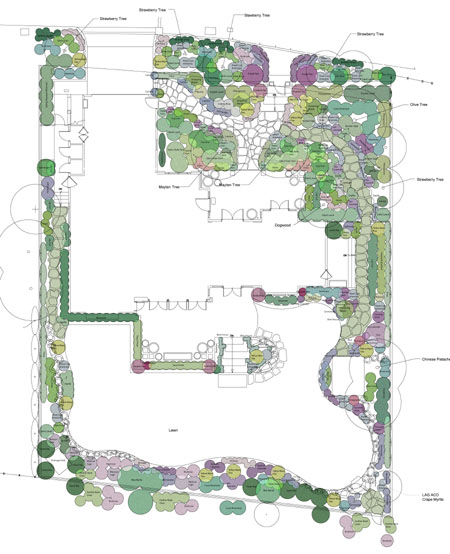
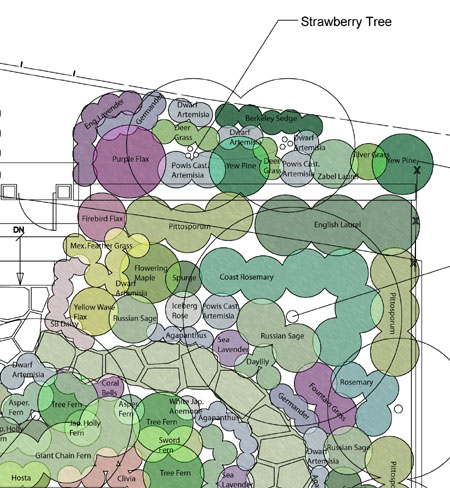
Here is a color planting plan from a recent project. We use colored planting plans with common plant names for illustrative communication with clients. Over the years we have found that these type of plans are much more effective and easier for clients to understand than black and white wireframe plans with Latin names, number systems, or abbreviations.
Posted by Michael O'Connell at 11:16 AM | Comments (0)
June 30, 2006
From the Drawing Board
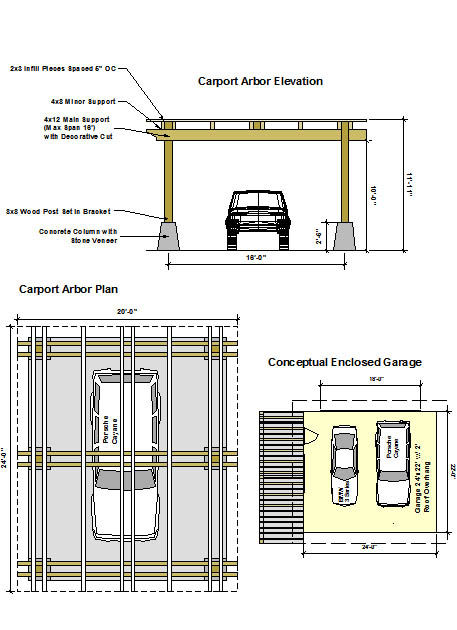
Here is a conceptual layout for a carport arbor for a project in Sonoma for a project in design:
Posted by Michael O'Connell at 08:02 AM | Comments (0)
April 28, 2006
Landscape Architecture's Identity Crisis
A recent review of our blog recently sparked a thought concerning landscape architecture. Most people do not really know what landscape architects are. This is a common topic of discussion in the profession, with seemingly monthly discourses in the professional magazine and lengthy manifestos, like that done at Iowa State- An Apocalyptic Manifesto, which laments the profession's complacency:
"At the start of the 21st Century, landscape architecture is a troubled profession, more distinguished by what it lacks than the qualities that it actually possesses. It has no historiography, no formal theory, no definition, direction, or focus. A vast schism currently existing between its academics and professional practitioners. In universities across the nation, researchers poach methodologies from other, more vibrant disciplines. Meanwhile, in professional offices, designers yoked to the bottom line crank out pedestrian design."
Of particular interest to me are the public's perception of landscape architecture and landscape architecture's relation to the construction industry. Ask your average person on the street to name an architect and a minimum you will get the iconic Frank Lloyd Wright. Likely modern names of Pei, Geary, and others will follow. Pose the same question with landscape architects, and any response would probably be an exception rather than the rule. Should landscape architects be as recognized as architects? Ask the same question of notables, concerning other design disciplines such as engineering, and you are unlikely to draw a response either (The Spanish architect and engineer Calatrava jumps to my mind).
From our perspective in residential landscape design and construction, a strengthening of the relationship between landscape architect and builder is something that could help the profession as well. Design theory is one important element, but equal focus on construction methodology and cost could enhance and improve the public sector practice of the profession.
For More:
Manifestos from the Pruned Blog
A definition from Gardenvisit
ASLA definition of the Profession
Wikipedia definitions and professional associations
Posted by Michael O'Connell at 12:35 PM | Comments (0)
April 03, 2006
The Katrina Cottage
There was an article in Slate last week highlighting the ingenious Katrina Cottage, a low cost alternative to the FEMA trailer, for victims of hurricanes Katrina and Rita. The cost of construction of the Cottages (there are several designs) is the same or less than the trailers. In addition, they are designed to better resist future flooding and hurricanes (walls are constructed of a concrete board to prevent mold and mildew). FEMA, however, is a hard sell so far. These cottages make sense, they work as a longer term solution to the problem and provide a more comfortable living environment.
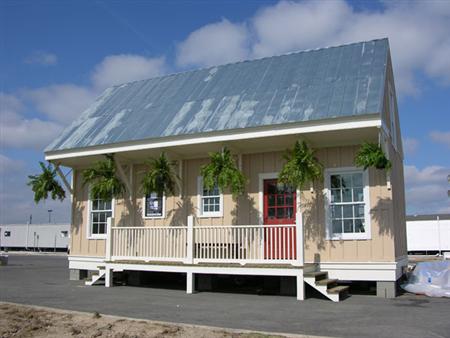
Image courtesy Slate
For More:
Inhabitat Article
Cusato Cottages- Manufacturers of one of the designs
Business Week Article
Posted by Michael O'Connell at 10:43 AM | Comments (0)
February 22, 2006
Architect Sim Van Der Ryn Interview
Noted California architect Sim Van Der Ryn was on Forum with Michael Krasney on KQED radio today (listen here). It was interesting to hear some of his perspectives on green architecture, alternative energy, and associated topics. See this previous post on the Real Goods Solar Living Center for more information on Van Der Ryn.
View details on Van Der Ryn's new book Design for Life at Amazon.
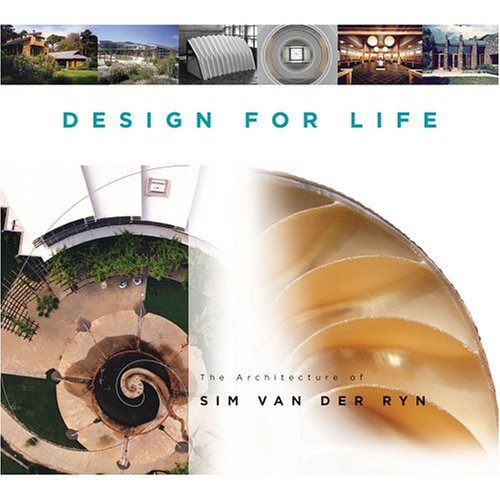
Image from Amazon.com
Posted by Michael O'Connell at 06:10 PM | Comments (0)
January 30, 2006
Design Review Tyrany?
San Francisco Chronicle architecture critic Arrol Gellner has a couple of very interesting takes of the state of design review and its increasing restrictiveness and emphasis on conformity. In Marin there are certainly some of the municipalities that are quite restrictive. There seems to be a correlation between the size of the municipality and the level restrictions placed on design. This is something that typically affects landscape projects less than building projects; but design review can get pretty restrictive even for landscapes. This is even more the case if the residence is in a PUD (Planned Urban Development) or HOA (Home Owners Association).
Read the first two parts of Gellner's Architext column: Design Review Boards Seem to Do More Harm than Good & Playing it Safe at the Cost of Originality
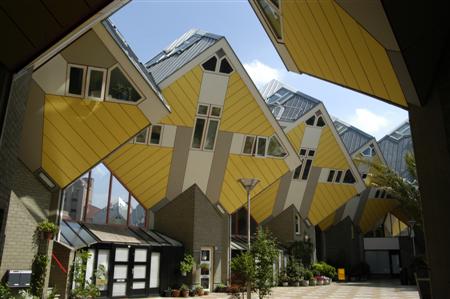
Art or Eyesore- Would this Rotterdam, Holland Cubic Condo Pass Design Review in the U.S.?
Posted by Michael O'Connell at 11:08 AM | Comments (0)
October 11, 2005
Design- The New Churches
A very interesting look at "Mega Church" design in Slate that is worth a look. These churches looked to me more like symphony halls or rock concert settings than your traditional places of worship.
Posted by Michael O'Connell at 10:36 PM | Comments (0)